
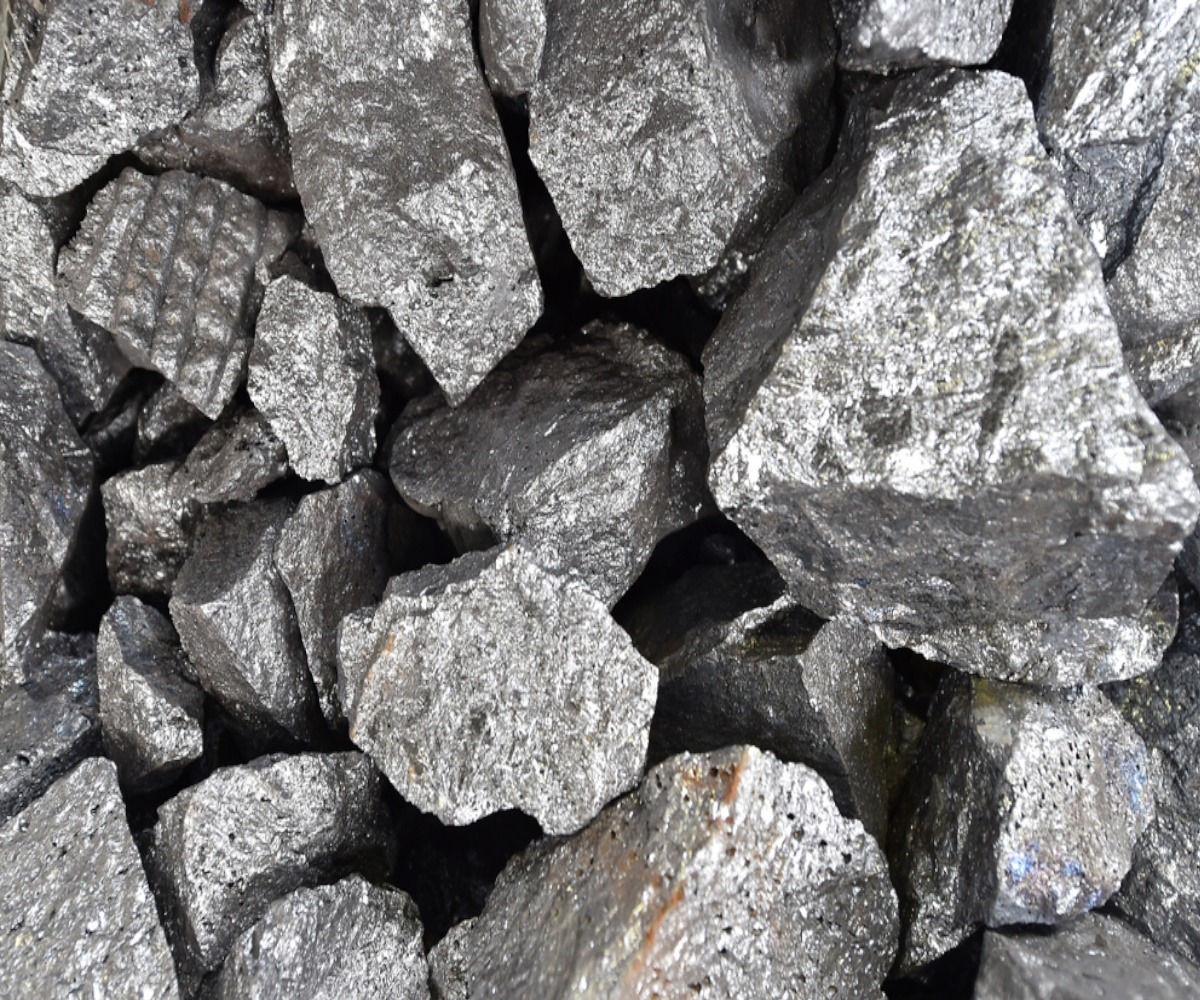


Ferrosilicomanganese combines silicon and manganese for efficient steel alloying applications.
Ferrosilicomanganese (FeSiMn) is a critical alloy of iron, manganese primarily used in steelmaking as a deoxidizer, desulfurizer, and alloying agent. It improves steel strength, toughness, and hardenability, with significant use in producing stainless steel and casting. Major producers and exporters include India, Malaysia, and Norway.
Key Aspects of Ferrosilicomanganese:
Function in Steelmaking: Acting as a composite deoxidizer, it helps minimize the formation of low-melting-point iron sulphides, preventing surface cracking during rolling. It is also used as a reducing agent for producing medium/low-carbon ferromanganese.
Composition & Grades: Contains 65-75% manganese and 15-25% silicon, with minor amounts of carbon. Common grades include MnS 17, MnS 22, and MnS 25.
Production: Produced in submerged arc electric furnaces via the carbothermic reduction of manganese ores, slags, and quartz.
Market & Trade: In 2024, India was the top exporter, followed by Malaysia and Norway. The global market is largely driven by the demand for cleaner, high-quality steel with good ductility and corrosion resistance.
Types: Standard grades (18-20% Si) and low-carbon silicomanganese (up to 30% Si).