
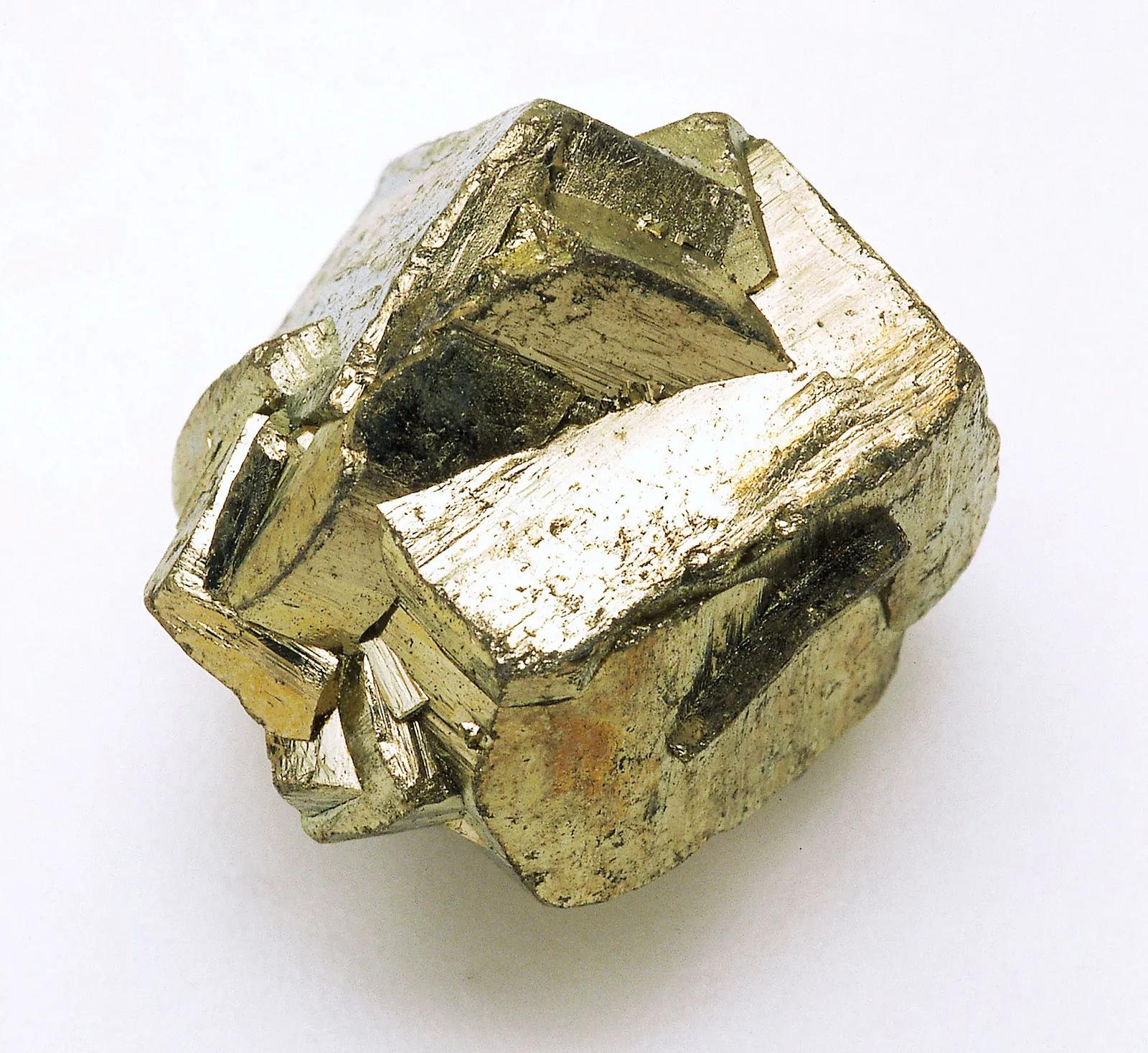

Pyrite is supplied as a mineral specimen for industrial research and specialty applications.
Pyrite, also known as “fool’s gold,” is a common iron sulfide mineral with a brass-yellow metallic luster, often found in cubic crystals or massive forms within various rock types. Known for producing sparks when struck against steel, its name derives from the Greek word for fire. It is used for sulfuric acid production, as a gemstone, and in industrial, potential solar cell applications.
Key Characteristics and Facts:
“Fool’s Gold”: While it resembles gold, pyrite is much harder, brittle, and lighter in weight, leaving a black or greenish-black streak, unlike gold’s soft yellow streak.
Composition:
It consists of roughly 46.7% iron and 53.3% sulfur, making it the most abundant sulfide mineral
Occurrence: It is found worldwide in igneous, metamorphic, and sedimentary rocks, often associated with other sulfides.
Uses: Historically used to start fires, it is now primarily used in the production of sulfur dioxide and sulfuric acid.
Construction Issue: Pyrite in construction aggregate can oxidize and react with moisture, causing expansion, cracking, and crumbling in concrete.
“Invisible” Gold: Sometimes, tiny amounts of actual gold are trapped within the crystal structure of pyrite.