


Description
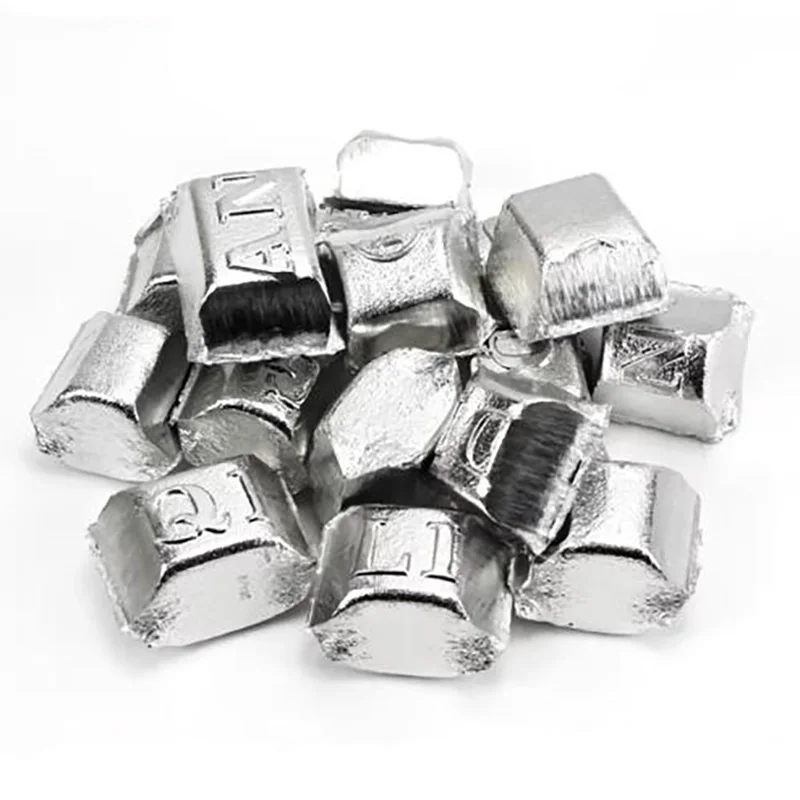
Tin ingots and granules are used in alloying and solder production.
Key Characteristics and Applications
- Forms: Available as solid ingots, granules (sometimes called popcorn or shots), pellets, and bars.
- Purity: High-purity tin (Sn) is generally 99.9% to 99.99% pure, often lead-free, and suitable for industrial or, in specific cases, specialized casting applications.
- Industrial Use: Extensively used in soldering, plating, and creating alloys.
- Physical Properties: Silvery-gray, soft, malleable, and ductile with a low melting point, making it ideal for coating surfaces.
- Packaging: Ingots are often sold in 15kg to 34kg blocks, while granules are convenient for smaller, measured, or experimental applications.
Supplier and Material Details
- Grade A: Tin ingots typically adhere to a minimum of 99.85% purity, suitable for, for example, electroplating and electronics at Belmont Metals.
- Granules/Popcorn: Often used in research and specialized applications because they are easy to dose, notes Atlantic Equipment Engineers and RotoMetals.com.
- Storage & Handling: Generally safe, but it is advised to handle in well-ventilated areas, avoid dust formation, and keep away from open flames.