
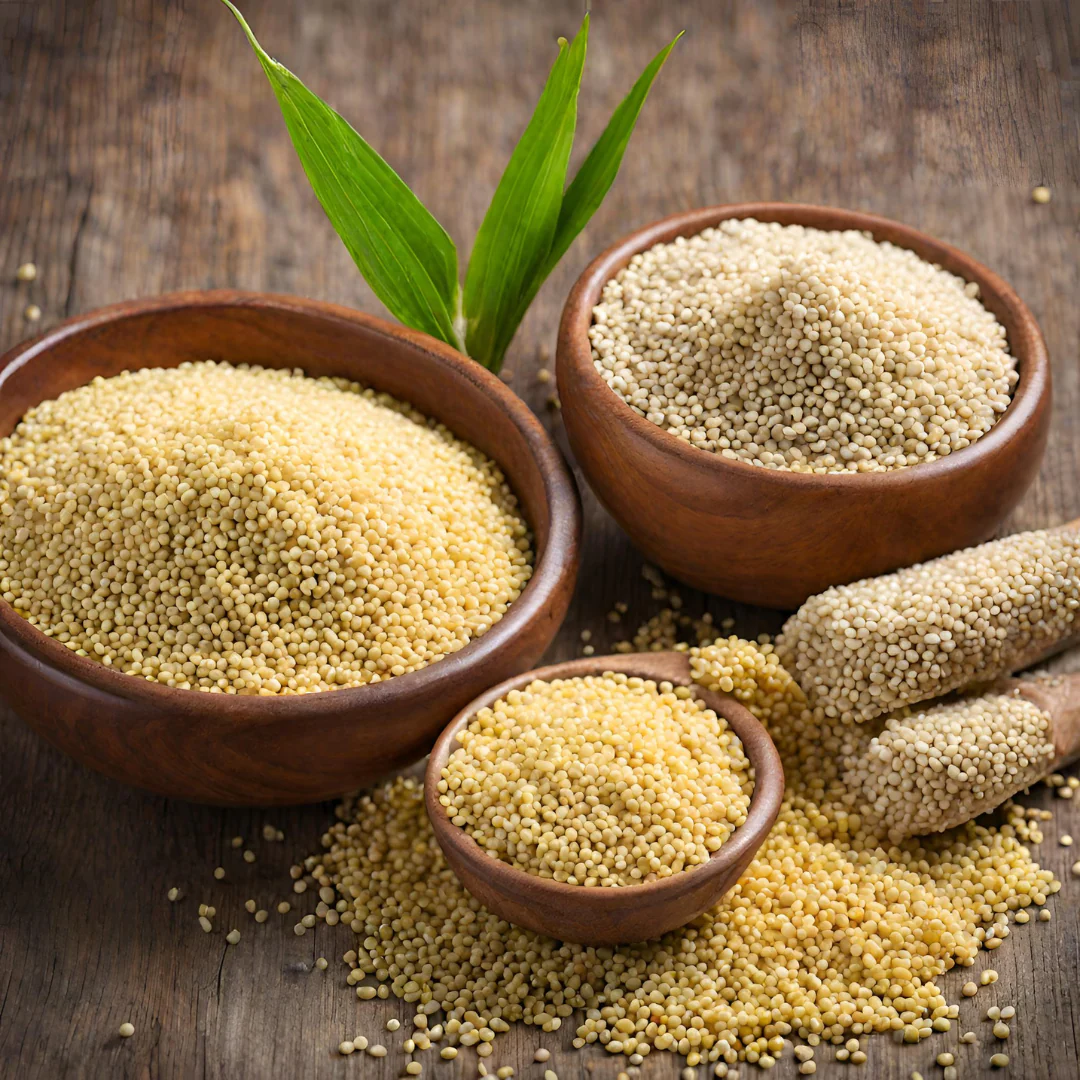

Millet is a cereal grain supplied for food production animal feed and industrial processing markets.
Millet is a highly nutritious, gluten-free ancient grain packed with protein, fiber, antioxidants, and minerals like magnesium and phosphorus. Ideal for healthy, sustainable diets, it has a light, nutty flavor suitable for porridge, salads, and baking. It helps manage blood sugar and cholesterol, offering a versatile, nutrient-dense alternative to rice or couscous.
Key Aspects of Millet
Nutritional Benefits: Rich in magnesium, phosphorus, and B vitamins. High fiber content assists in digestion and keeps you full longer.
Health Benefits:
Helps regulate blood sugar levels and lowers cholesterol, reducing the risk of heart disease
. It is also beneficial for skin and hair
.
Versatility in Cooking: With a mild, corn-like flavor, it can be served as a side dish, in salads, or for breakfast porridge.
Types: Common types include pearl millet, finger millet, proso millet, and foxtail millet.
Sustainability: Known for being a hardy crop, millet is drought-resistant and thrives in harsh, dry environments with less fertile soil.
Dietary Needs: Completely gluten-free, making it an excellent choice for individuals with celiac disease or gluten sensitivities.
It is recommended to consume in moderation, as excessive intake may not be suitable for those with specific thyroid or digestive issues.