
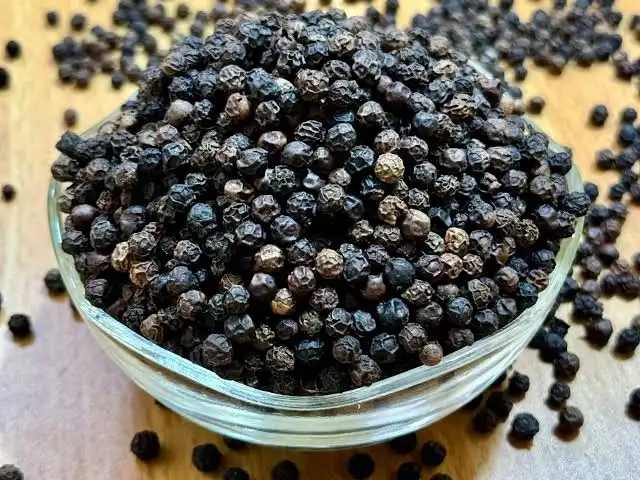



Black pepper is supplied in whole or ground form for food processing and ingredient use.
Black pepper is one of the most common and versatile spices globally, available in several forms to suit various culinary needs.
Whole Black Peppercorns: These are the entire dried berries. For the best flavor and aroma, it is recommended to grind them fresh using a pepper mill as needed. This form has a long shelf life when stored in a cool, dark place.
Ground Black Pepper: This is pre-ground pepper powder, which offers convenience and blends easily into sauces and soups. Its flavor fades more quickly than whole peppercorns.
Coarse Ground Black Pepper: This form provides a bolder flavor and a crunchy texture, ideal for rubs, spice blends, and dishes like pepper-crusted steak.
Other Forms from the Same Plant:
White pepper is the seed of the fully ripe fruit, with the outer skin removed, offering a different, less pungent flavor.
Green pepper is made from unripe berries treated to retain their green color, often preserved in brine or vinegar.
Red peppercorns are the ripe fruits preserved in brine.
Regional Varieties: Different regions produce varieties with distinct flavor profiles. Notable types include Tellicherry (considered high quality and flavorful, known for bold berries), Malabar, and Sarawak pepper.
Health Benefits and Nutritional Information
The active compound, piperine, is responsible for many of black pepper’s potential health benefits.
Antioxidant Properties: Black pepper is rich in antioxidants, which help fight cell damage caused by free radicals in the body.
Digestive Aid: It stimulates the production of hydrochloric acid in the stomach and enhances digestive enzyme activity, helping to break down food more efficiently and potentially reducing gas and bloating.
Enhanced Nutrient Absorption: Piperine has the unique ability to significantly increase the bioavailability and absorption of other nutrients and therapeutic drugs, most famously curcumin from turmeric.
Anti-inflammatory Effects: Studies suggest that piperine has strong anti-inflammatory properties that may help manage chronic inflammation, a factor in many conditions like arthritis and heart disease.
Potential Cancer-Fighting Properties: Laboratory and test-tube studies show that piperine may slow the replication of certain cancer cells, but human research is still needed.