

Formaldehyde 37 Percent

Formaldehyde solution is used in chemical manufacturing resins preservation and industrial processing.
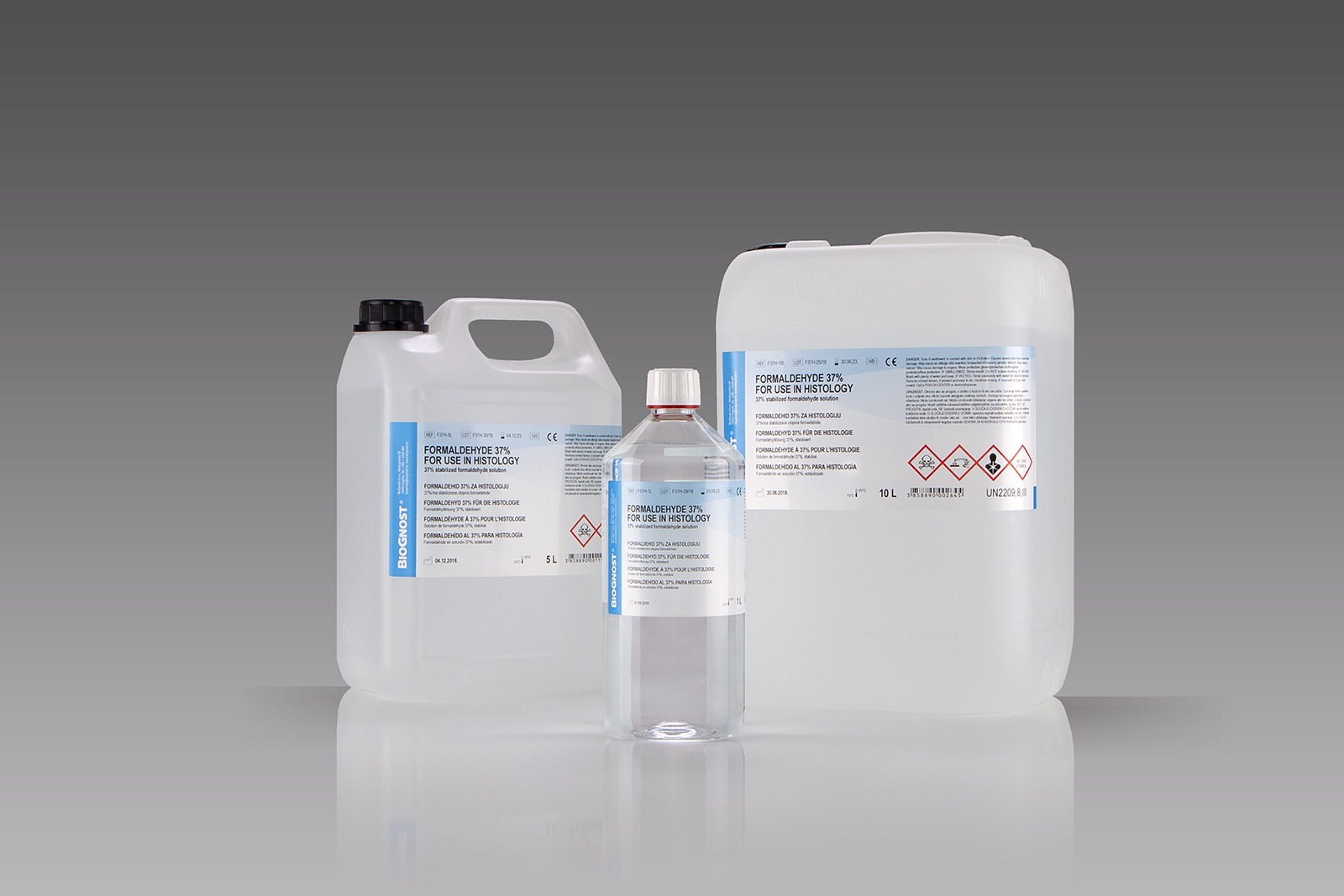
Formaldehyde 37% (Formalin) is a clear, colorless aqueous solution with a pungent odor, commonly used as a high-strength fixative in histology, disinfectant, and industrial chemical intermediate. Often stabilized with 10-15% methanol to prevent polymerization, it is a known human carcinogen, toxic by inhalation and ingestion, and requires specialized handling.
Key Details and Properties
Alternative Names: Formalin, Methanal, Formol, Formaldehyde solution.
Concentration: Typically 37% by weight, often termed “technical grade” or USP.
Composition: Contains 37% formaldehyde gas dissolved in water, with 7–15% methanol (methyl alcohol) added as a stabilizer to inhibit the formation of paraformaldehyde.
Density: Approximately 1.09 g/cm³.
Boiling Point: ~93–96 °C.
Main Applications
Tissue Fixation: Used extensively in pathology and histology laboratories to preserve tissue samples.
Industrial Use: Raw material for producing synthetic resins, plastics, and coatings (e.g., urea-formaldehyde, phenol-formaldehyde).
Disinfectant: Used in, funeral homes, and for agricultural/industrial sanitization.
Chemical Synthesis: Precursor to various chemicals.
Hazards and Safety
Classification: Classified as a Category 1A human carcinogen.
Acute Toxicity: Highly irritating to eyes, skin, and mucous membranes. Inhalation and oral consumption can be fatal.
Flammability: The liquid has a flash point of ~62 °C.
Handling: Requires proper ventilation (fume hood), personal protective equipment (gloves, goggles), and safe storage to avoid polymerization.
Storage and Handling
Temperature: Store between 15-25°C.
Stability: Stable, but prone to forming Paraformaldehyde (a white solid) if kept at too low a temperature.
Shelf Life: Generally 24 months.