
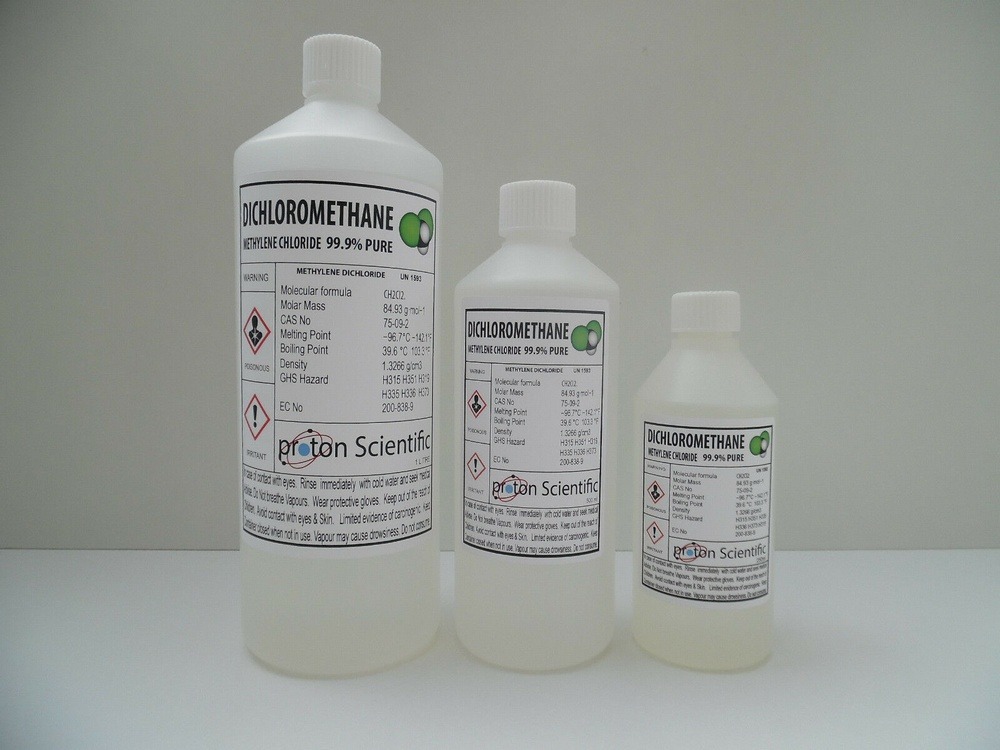


Dichloromethane is a widely used solvent for extraction degreasing and chemical processing.
Core Properties
Volatility: It evaporates quickly at room temperature, with a low boiling point of approximately 39.6 °C.
Solubility: It is slightly soluble in water but highly miscible with most organic solvents, making it a powerful industrial solvent.
Non-flammability: Unlike many other organic solvents, it is non-flammable and can even act as a flame suppressant in aerosols.
Density: It is denser than water (approx. 1.33 g/cm³), meaning it settles as the bottom layer in aqueous extractions.
Key Industrial & Commercial Uses
Solvent & Stripper: Historically the primary ingredient in paint and varnish removers, though now restricted in several regions like the EU and US for consumer use.
Food Industry: Used as an extraction solvent for decaffeinating coffee and tea and for extracting spices and hops.
Chemical Manufacturing: Essential in producing pharmaceuticals, adhesives, synthetic fibres, and polycarbonate resins.
Electronics: Used as a degreasing agent to clean printed circuit boards during production.
Niche Applications: The working fluid in the “drinking bird” toy and holiday bubble lights because of its low boiling point.
Health & Safety Hazards
DCM is classified as a neurotoxin and a probable human carcinogen.
Inhalation: Can cause dizziness, headaches, and confusion. In high concentrations, it leads to central nervous system depression, unconsciousness, or death.
Metabolism: The body metabolises DCM into carbon monoxide, which can cause CO poisoning and reduce oxygen delivery to tissues.
Skin/Eye Contact: Causes irritation and can lead to severe chemical burns if evaporation is prevented.
Regulatory Bans: Due to its high toxicity, the US EPA issued a rule in 2024 banning most consumer and industrial uses to protect workers and the public.