

Demulsifiers Proprietary Blends

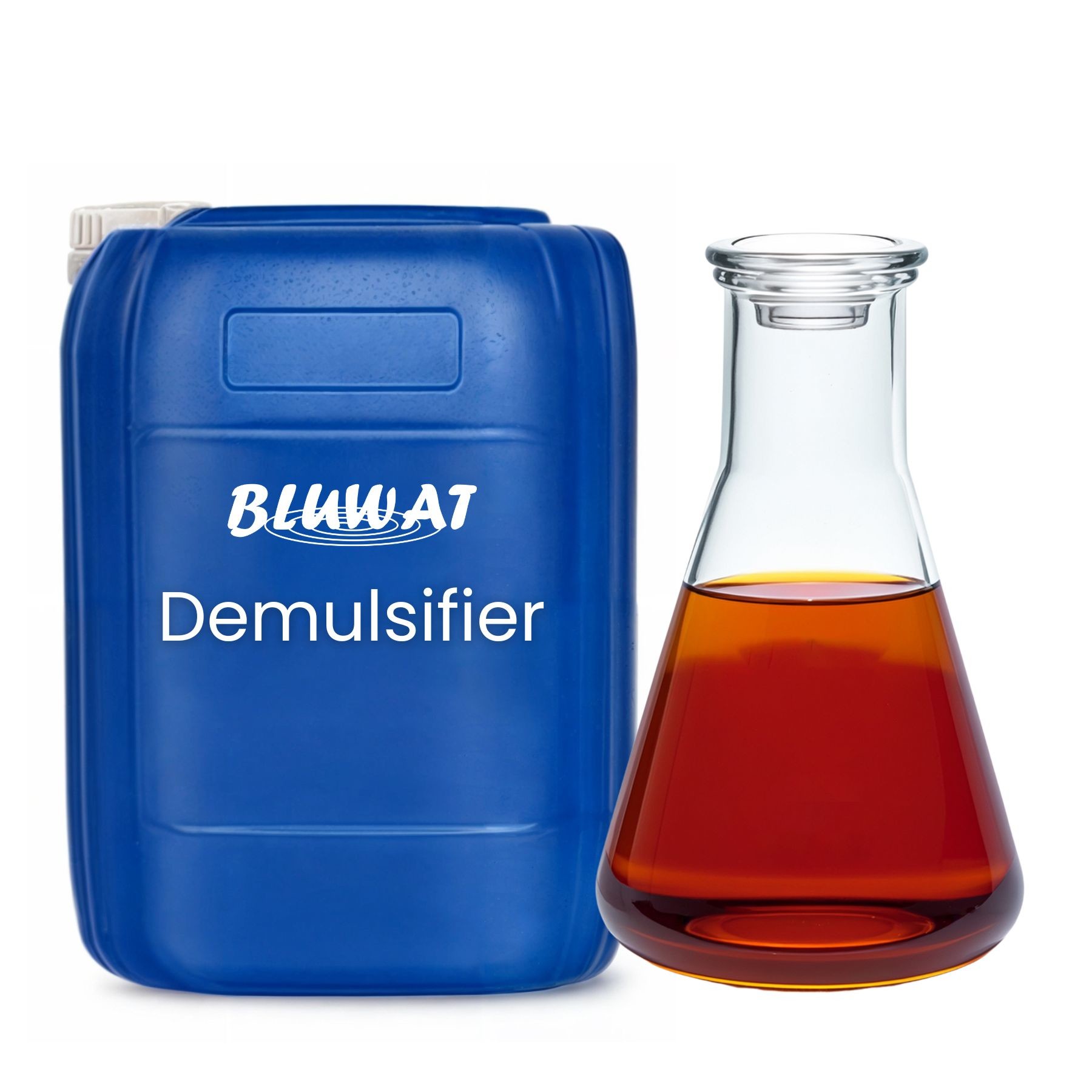
Demulsifiers are specialized chemical blends used in water treatment and industrial separation processes.
Demulsifier proprietary blends are specialized chemical formulations, often consisting of resin alkoxylates, polyols, or surfactant mixtures (e.g., polyoxyalkylene-polysiloxane). These blends disrupt the interfacial tension of oil-water emulsions, promoting rapid coalescence and separation of water from crude oil, or vice versa (reverse demulsifiers).
Key aspects of proprietary demulsifier blends:
Purpose: Used for breaking tight oil-in-water or water-in-oil emulsions, enhancing oil-water separation in oilfield production and refineries.
Composition: Often tailored blends of surfactants, resin alkoxylates, polyalkoxylates, or polyols designed for specific crude types. Some use specialized environmentally-friendly solvents.
Mechanism: These surfactants change the interfacial tension of the oil, allowing water droplets to coalesce and separate more easily.
Applications:
Forward Demulsifiers: Used at the wellhead or in tanks to break water-in-oil emulsions.
Reverse Demulsifiers: Applied to treat produced water (oil-in-water) for disposal or reuse, ensuring clean water discharge.
Examples: DEMET® M-9510 (resin-based), PHASETREAT® (environmentally friendly), and RXSOL.
Performance: These products are often fast-acting, even in high water cut conditions, with low-dose requirements (1–20 ppm).
These proprietary formulations are often developed for specific applications, such as improving oil-water separation in refinery crude pre-treatment or separating produced water in storage tanks.