


Description
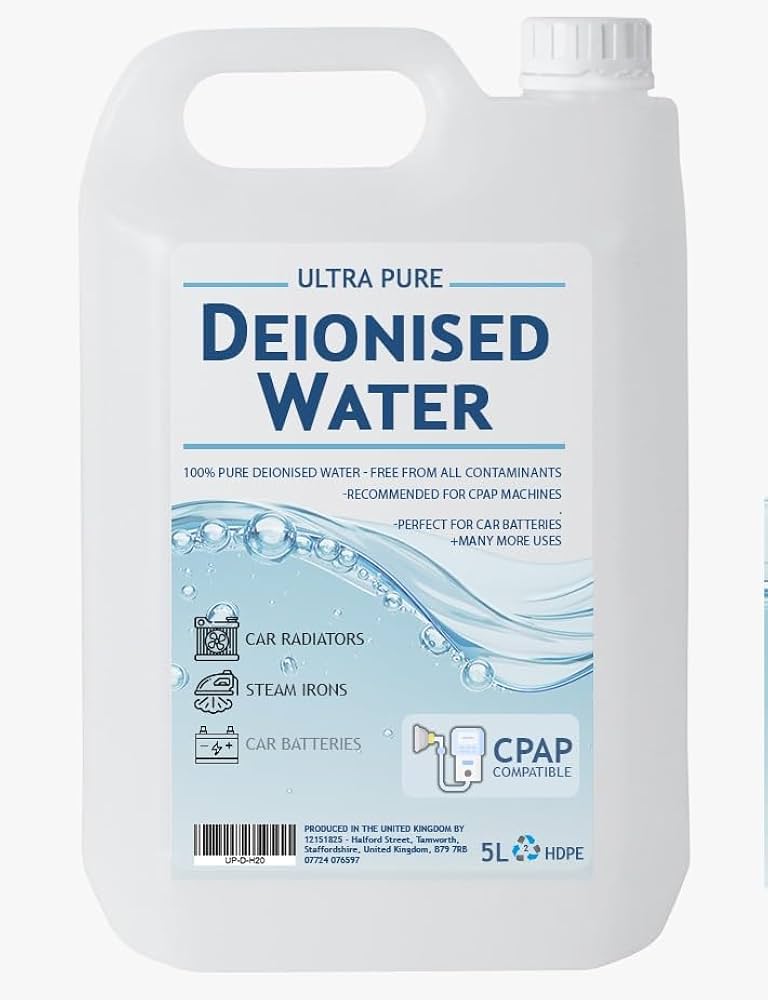
Deionised water is supplied for food processing beverage production and industrial food applications.
Deionized (DI) water is H₂O with most of its mineral ions (like calcium, sodium, chloride) removed through ion-exchange resins, making it highly pure and electrically non-conductive, ideal for labs, electronics, and industrial processes where mineral buildup or interference is problematic, but it’s not recommended for drinking as it lacks beneficial minerals and can be corrosive. It differs from distilled water, though both are pure, as deionization removes ions while distillation removes non-volatile impurities via boiling and condensation, and DI water doesn’t remove uncharged contaminants like bacteria.
How It’s Made
- Water passes through tanks containing positively and negatively charged ion-exchange resins.
- These resins attract and capture mineral ions (cations and anions) from the water, exchanging them for hydrogen and hydroxide ions, which then form pure water.
Key Characteristics
-
- High Purity: Free from dissolved salts and minerals.
- Low Conductivity: Because ions carry electrical charge, removing them makes the water a poor conductor.
- Not Distilled: Deionization removes ions; distillation removes most impurities through boiling/condensation.
Common Uses
- Laboratories: For reagents, dilutions, and sensitive analytical equipment (chromatography, photometry).
- Industrial: Boiler feed, cooling systems, electronics manufacturing.
- Automotive: Car batteries, steam irons (prevents mineral buildup).
- Cosmetics & Pharma: As a solvent where mineral-free purity ensures stability and effectiveness.
Safety & Drinking
- Not for Drinking: It lacks essential minerals and can be slightly corrosive to tissues and enamel; pathogens (viruses, bacteria) are not removed.
- Safe for Appliances: Prevents scale buildup in irons, humidifiers, etc..


