
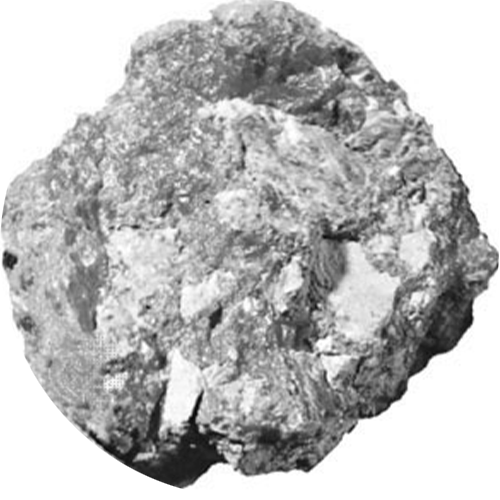
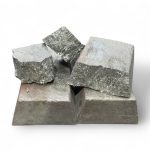
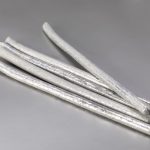

Arsenic metal is used in metallurgical and specialty alloy applications.
Arsenic (symbol As, atomic number 33) is a naturally occurring element widely distributed in the Earth’s crust. Chemically, it is a metalloid, meaning it possesses properties of both metals and nonmetals, though in its most stable elemental form, it appears as a brittle, steel-grey solid often referred to as metallic arsenic.
Physical & Chemical Characteristics
Arsenic exists in several allotropic forms, each with distinct properties:
Grey Arsenic: The most stable and common form. It has a metallic appearance, is a semimetal, and is a fair conductor of electricity.
Yellow Arsenic: A soft, waxy, and highly toxic form created by rapidly cooling arsenic vapour. It is unstable and converts back to the grey form when exposed to light.
Black Arsenic: An amorphous, glassy, and brittle form that is a poor electrical conductor.
Sublimation: Under standard pressure, arsenic does not melt; it sublimes, turning directly from a solid into a gas at 614°C.
Common Industrial Uses
While its use is declining due to health concerns, arsenic remains critical in several sectors:
Electronics: High-purity arsenic is a vital doping agent for semiconductors. It is a key component of Gallium Arsenide (GaAs), used in mobile phones, LEDs, and solar cells.
Alloying Agent: Added to lead and copper to increase hardness. It is used in lead-acid car batteries, ammunition, and specialized solders.
Wood Preservation: Historically, Chromated Copper Arsenate (CCA) was the primary use for inorganic arsenic. While banned for residential use in many countries, it is still used for industrial utility poles and marine pilings.
Glassmaking: Used as a decolouriser and to improve clarity and UV protection in specialized glass.
Toxicity & Health Risks
Arsenic is notoriously toxic, particularly in its inorganic forms (like arsenic trioxide).
Poisoning Mechanisms: It can mimic phosphate in the body, disrupting essential cellular energy production (ATP) and binding to critical enzymes.
Acute Effects: Immediate symptoms include vomiting, abdominal pain, and “pins and needles” sensations in the extremities.
Chronic Exposure: Long-term ingestion through contaminated groundwater or food is a major cause of arsenicosis, leading to skin lesions, “blackfoot disease,” and cancers of the skin, bladder, and lungs.
Safety Limits: The World Health Organization (WHO) and the U.S. EPA recommend a limit of 10 parts per billion (ppb) for arsenic in drinking water.
Natural Sources & Production
Arsenic is rarely found as a pure metal in nature; it is typically found in minerals like arsenopyrite (iron arsenic sulfide), realgar, and orpiment. Currently, most arsenic is produced as a byproduct of smelting copper, gold, and lead ores, with China and Morocco being the world’s leading producers.