


Nickel oxide is supplied for battery manufacturing ceramics catalysts and industrial processing.
Nickel oxide most commonly refers to nickel(II) oxide (NiO), an inorganic compound that is the principal oxide of nickel. It typically appears as a green crystalline powder but can also be found in a black form due to non-stoichiometry (where the ratio of nickel to oxygen isn’t exactly 1:1).
Key Properties
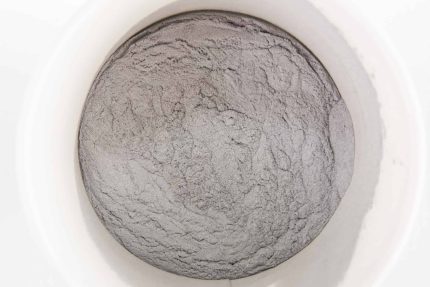
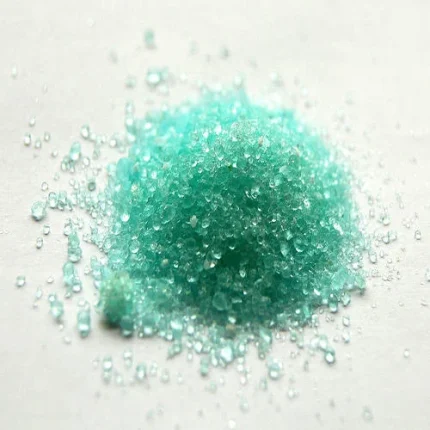
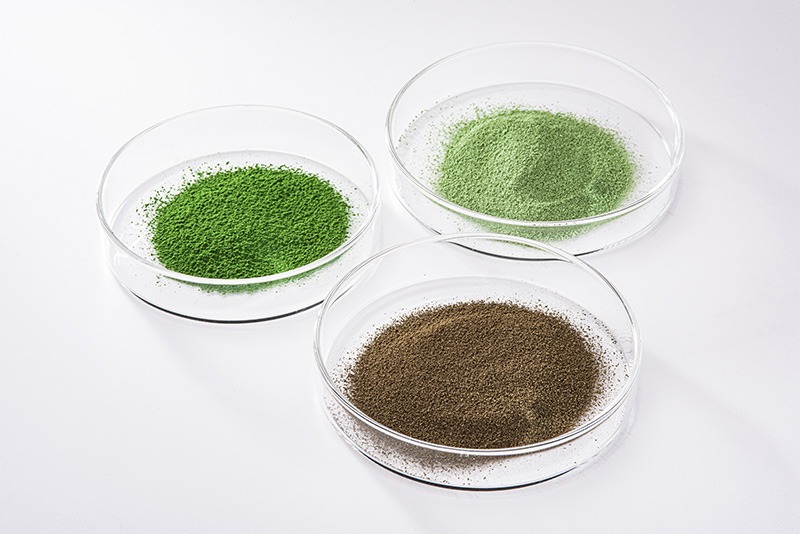
Appearance: Typically an olive-green powder; black-to-gray versions occur with higher oxygen content.
Crystal Structure: It adopts a rock salt (NaCl) structure, where both nickel and oxygen atoms are six-coordinated.
Melting Point: Approximately 1,955 °C.
Magnetism: It is a prototypical antiferromagnet at room temperature, with a Néel temperature of about 523 K (250 °C).
Electronic Nature: It is a p-type semiconductor and a wide bandgap Mott insulator.
Common Applications
Ceramics & Glass: Used extensively as a pigment to produce green, brown, and grey glazes or to “soften” other colors.
Batteries: Serves as a precursor for electrode materials in NiCd (nickel-cadmium), NiMH (nickel-metal hydride), and lithium-ion batteries.
Energy Technology: Employed as a cathode material in fuel cells and as a hole-transport layer in thin-film solar cells.
Catalysis: Acts as a catalyst for hydrogenation and as an oxidant for waste gas purification.
Safety & Health Risks
Nickel oxide is classified as a human carcinogen. Long-term inhalation is highly toxic and can lead to:
Lung lesions and respiratory cancer.
Skin sensitization (“nickel itch”) and allergic dermatitis.
Damage to aquatic life with long-lasting effects.