


Description
Threonine is used as an amino acid supplement in animal feed formulations.
Key Product Information
- Function: As an essential amino acid, L-threonine cannot be synthesised by animals in sufficient quantities and must be supplied through their diet to support protein synthesis, tissue repair, and the development of the immune system and skeletal muscle.
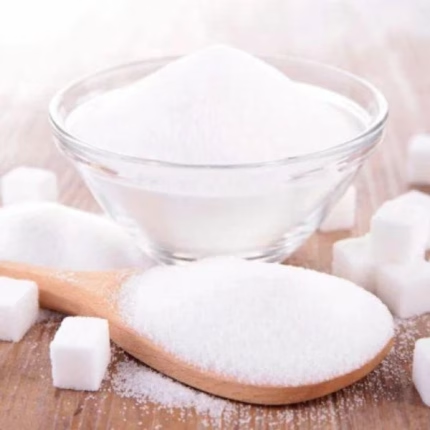
- Physical Form: It is a white or off-white crystalline powder or granule with a slightly sweet taste.
- Purity: Standard feed-grade L-threonine has a minimum purity of 98.5% on a dry matter basis.
- Solubility: It is freely soluble in water.
- Stability: The product is stable for at least 2 years if stored in a cool, dry place away from direct sunlight and moisture.
- Regulatory Status: Its use as an animal feed additive is approved by regulatory bodies like the FDA and EFSA, falling under the category of “nutritional additives”.
Benefits and Applications
L-threonine is widely used in feed for various animals, most notably in monogastric animals like poultry and swine where it is often the second or third most limiting amino acid after lysine and methionine.
- Improved Growth and Feed Efficiency: L-threonine enhances the efficiency with which animals convert feed into body mass, leading to better weight gain, muscle development, and reduced feed costs.
- Enhanced Immune Function and Gut Health: It plays a vital role in the production of antibodies and is a key component of mucins in the gut lining, which improves digestive health and nutrient absorption, and reduces the risk of disease.
- Environmental Benefits: Supplementation allows for the lowering of crude protein levels in feed while maintaining performance, which decreases nitrogen excretion in manure and ammonia emissions, contributing to more sustainable farming practices.