


Cupric chloride dihydrate is supplied for chemical synthesis catalyst preparation and industrial processing.
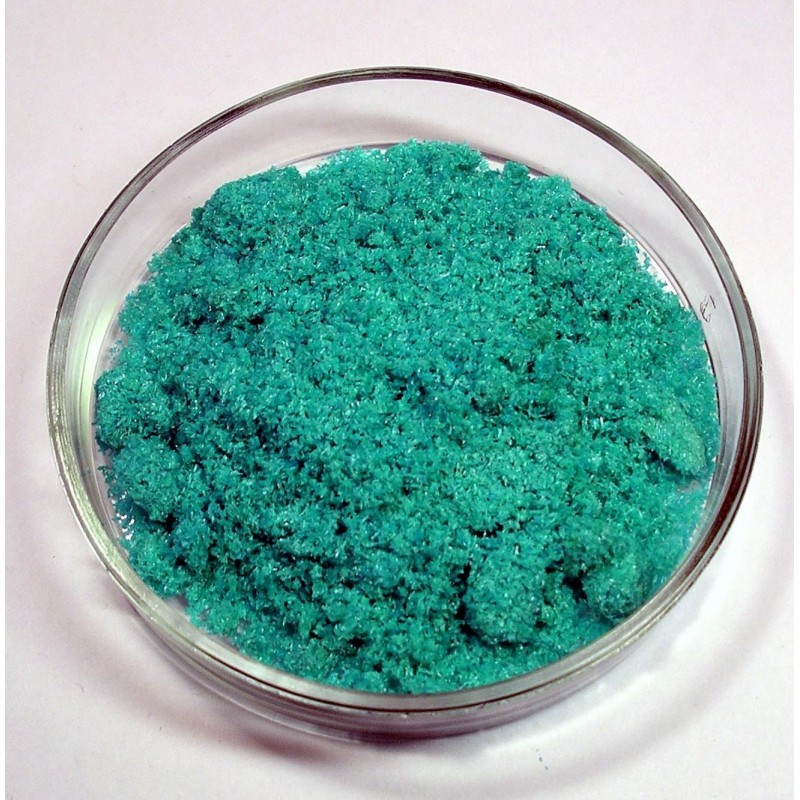
Cupric Chloride Dihydrate (CuCl₂·2H₂O) is a blue-green crystalline inorganic compound formed when anhydrous copper(II) chloride absorbs moisture. It is a versatile chemical used across laboratory, industrial, and medical sectors.
Key Properties
Appearance: Typically found as blue-green or emerald-green crystals.
Molar Mass: Approximately 170.48 g/mol.
Solubility: Highly soluble in water, ethanol, and acetone.
Melting Point: Dehydrates into the anhydrous form at roughly 100 °C.
Natural Occurrence: Exists in nature as the rare mineral eriochalcite.
Common Applications
Chemical Catalyst: Acts as a co-catalyst in the Wacker process to produce acetaldehyde and as a catalyst for chlorination reactions.
Industrial Uses: Employed in electroplating to deposit copper, as a mordant for textile dyeing, and as a wood preservative.
Medical & Supplements: Used as a sterile additive in Total Parenteral Nutrition (TPN) for patients who cannot absorb copper through food.
Pyrotechnics: Used to produce blue and green flames in fireworks.
Safety & Hazards
Cupric chloride dihydrate is classified as a hazardous substance and should be handled with care:
Health Risks: Harmful if swallowed and causes serious eye damage and skin irritation.
Environmental Impact: Very toxic to aquatic life with long-lasting effects; do not release into the environment.
Storage: Keep in tightly closed containers in a cool, dry place as it is hygroscopic (absorbs moisture).