

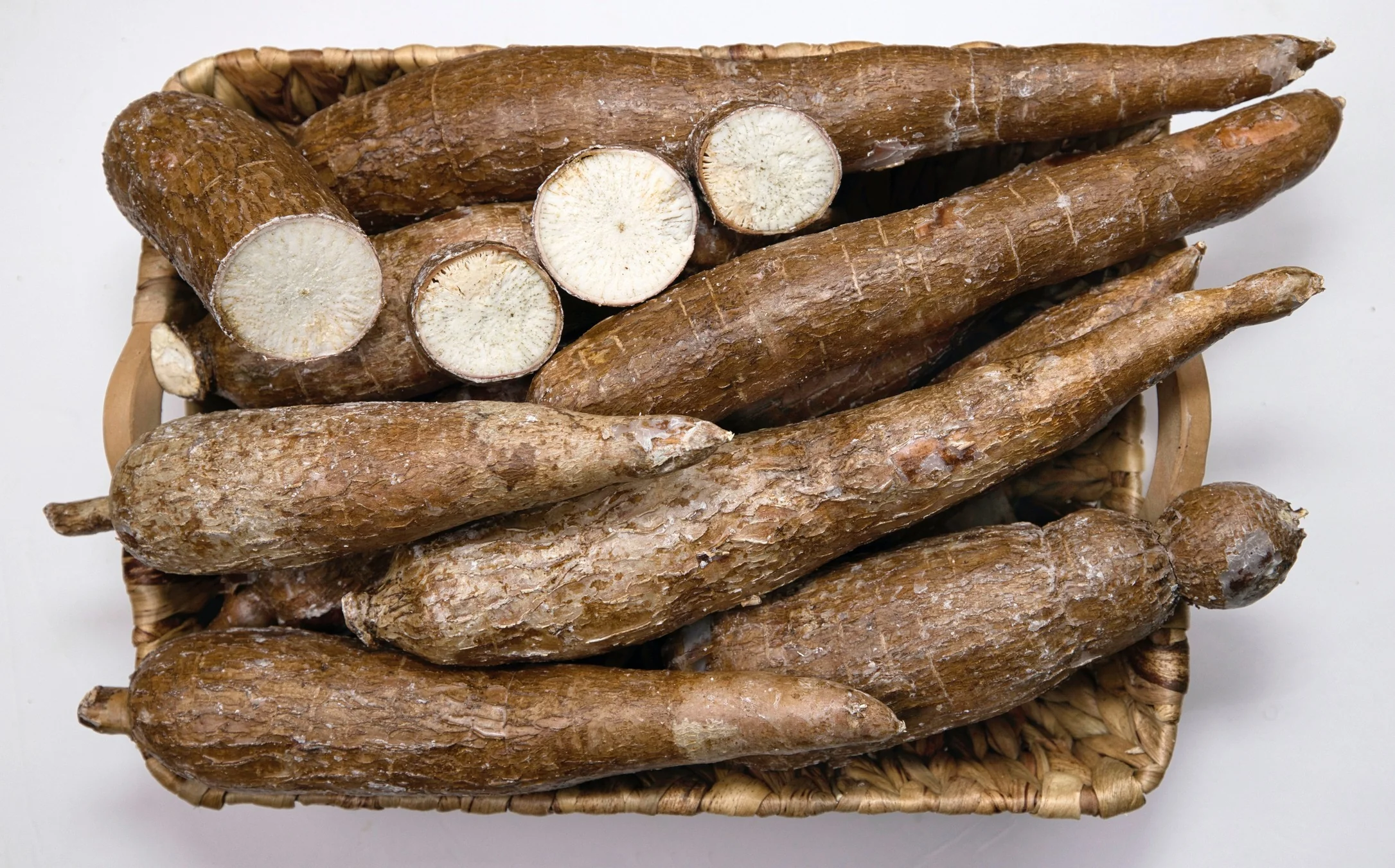


Cassava
Root crop for food starch and industrial applications

Cassava is a major agricultural commodity used in food production starch processing and industrial applications It is supplied in fresh dried or processed form.
Cassava (Manihot esculenta) is a vital, drought-tolerant, starchy root vegetable staple for over 800 million people in tropical regions, offering a rich source of carbohydrates. Also known as yuca or manioc, it is highly versatile, with roots used for flour, tapioca, and cooking, and leaves eaten as a vegetable. It must be properly peeled and cooked to remove cyanide, but it provides significant fiber, vitamin C, and potassium.
Key Facts About Cassava
Varieties & Usage: There are sweet and bitter varieties, with sweet cassava being more common for direct consumption. It is used as a potato substitute (boiled, fried, baked).
Key Products: Cassava is processed into cassava flour, tapioca pearls (used for boba),
Nutritional Profile: It is high in carbohydrates and energy, providing moderate amounts of vitamin C, fiber, and potassium.
Safety Warning: Raw cassava contains cyanide compounds; it must be thoroughly peeled, soaked, or fermented, and cooked before consumption.
Cultivation: As a hardy, drought-resistant shrub, it is grown in over 80 countries, predominantly in Africa, Asia, and South America.
Health Benefits
Gut Health: The resistant starch in cassava supports digestive health.
Energy Source: Its high calorie and carbohydrate content makes it a crucial food staple for energy.
Antioxidant Support: It provides Vitamin C, which assists with immune function and collagen production.
Common Culinary Uses
Yuca Fries: Boiled and then fried, creating a crispy, buttery, and savory dish.
Cassava Cake: A popular dessert in many tropical cultures.
Flour & Thickener: Cassava flour is a popular gluten-free alternative for baking, while tapioca starch is used as a thickener.


