

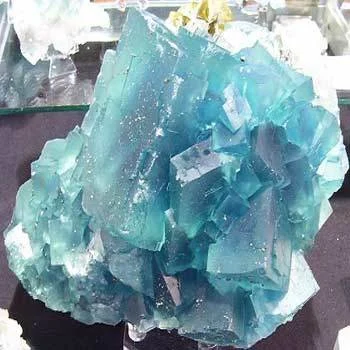


Calcium fluoride (chemical formula CaF₂) is a white, water-insoluble inorganic compound that occurs naturally as the mineral fluorite (or fluorspar). It is the primary global source of fluorine and is used extensively in high-tech optics, metallurgy, and dental care.
Key Properties
Appearance: Calcium fluoride Typically a white crystalline solid or powder, though natural fluorite can be deeply colored (purple, green, blue) due to impurities.
Solubility: Highly insoluble in water (0.0016 g/100 mL), which is a key differentiator from other fluoride salts like Sodium Fluoride.
Optics: It is transparent across a broad spectrum from deep ultraviolet (UV) to infrared (IR) and has an exceptionally low refractive index (approx. 1.43).
Melting Point: High thermal stability, melting at approximately 1,418 °C.
Major Applications
Optics & Electronics: Due to its UV-IR transparency and low dispersion, Calcium fluoride is used to manufacture lenses and windows for Telescopes, microscopes, thermal imaging systems, and Excimer Lasers used in semiconductor manufacturing.
Metallurgy: Acts as a “flux” to lower the melting point of slag and remove impurities in the production of steel and aluminum.
Dental Health: Used in specialized toothpastes and varnishes. It forms a “labile reservoir” on tooth enamel, slowly releasing fluoride to promote remineralization and prevent cavities.
Chemical Precursor: The primary raw material for producing Hydrogen Fluoride (HF), which is essential for making refrigerants, polymers (like Teflon), and other fluorinated chemicals.
Safety & Health
Toxicity: It is generally considered less toxic than soluble fluorides because it is poorly absorbed by the body.
Hazards: While stable, it can react with strong acids (like sulfuric acid) to release highly corrosive and toxic hydrogen fluoride gas. Inhalation of dust should be avoided.