
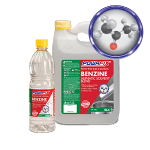

Benzene is an industrial solvent and chemical intermediate supplied for regulated manufacturing and synthesis applications.
Key Characteristics and Structure
Benzene is classified as an aromatic hydrocarbon due to its unique, stable ring structure.
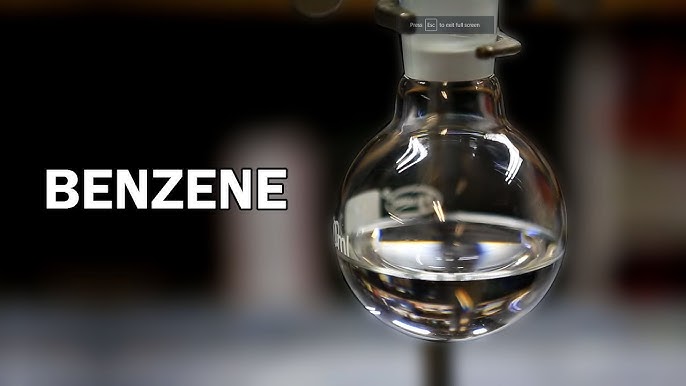
Appearance and Odor: A colorless liquid with a sweet, petroleum-like odor.
Flammability: Highly flammable and volatile, evaporating quickly into the air.
Structure: The molecule is planar and composed of six carbon atoms joined in a hexagonal ring, with one hydrogen atom attached to each carbon atom. This structure features delocalized pi electrons across the entire ring, which accounts for its unusual stability (aromaticity). It is often represented graphically by a hexagon with a circle inside.
Solubility: It is only slightly soluble in water but is miscible with many organic solvents like alcohol, acetone, and chloroform.
Common Sources and Uses
Benzene occurs naturally in crude oil, gasoline, volcanic emissions, and forest fires. Human activities, such as industrial emissions, motor vehicle exhaust, and cigarette smoke, are major sources of environmental exposure.
Industrial Feedstock: The primary use of benzene is as a chemical intermediate to produce other complex chemicals. These derivatives are used to manufacture:
Plastics (e.g., polystyrene) and resins.
Synthetic fibers (e.g., nylon).
Detergents, dyes, and pesticides.
Lubricants and some types of rubbers.
Pharmaceuticals.
Solvent and Fuel Additive: Historically, it was used widely as a solvent and a gasoline additive (for anti-knock properties). Due to toxicity concerns, its use in consumer products and as a general solvent has been significantly reduced or eliminated in many countries.